





Fall Lawn Care Guide: 8 Things to Do Before Winter
Cony Y. - 2026/10/15
Summer may be over, but your lawn still has some work to do. Cooler temperatures can make fall one of the best times to repair thin grass, improve soil conditions, and prepare your yard for the months ahead. A little attention now can make a noticeable difference when spring arrives.
This fall lawn care guide covers eight practical steps to add to your seasonal routine, from mowing and watering to overseeding and weed control. Whether you maintain a small backyard or a larger lawn, this fall lawn care checklist will help you decide what to do before winter sets in.

1. Adjust Your Mowing Height for Fall
Grass still needs regular mowing in fall, as long as it is actively growing. However, growth usually slows as temperatures drop, so you may not need to mow as frequently as you did in summer.
One common mistake is cutting the lawn unusually short before winter. Short grass has less leaf area to support itself, while grass left excessively long may become matted under snow or damp leaves. The goal is to maintain a suitable height for your particular grass type rather than forcing every lawn to the same length.
For many cool-season lawns, a mowing height of around 2.5 to 3.5 inches works well. Warm-season grasses have different requirements, so check the recommended height for your lawn before making adjustments.
If your yard has different grass types or areas with different mowing needs, being able to adjust the cutting height can make lawn care much easier. For example, a robotic mower like the RoboUP Raccoon 2 SE offers adjustable mowing heights from 30 to 80 mm (approximately 1.2 to 3.1 inches), allowing you to choose a suitable cutting height for your lawn's conditions. This flexibility can be particularly useful when maintaining different sections of a yard.

Keep these mowing tips in mind:
- Follow the one-third rule: Never remove more than one-third of the grass blade in a single mowing session. Cutting too much at once can stress the lawn.
- Keep mower blades sharp: Dull blades tear grass instead of cutting it cleanly, leaving ragged tips that can turn brown.
- Reduce mowing frequency gradually: As grass growth slows, let the lawn's actual growth determine when it needs another cut.
There is no need to force a final mowing date on your calendar. Continue mowing while the grass grows, then stop when growth has largely ceased for the season.
2. Clear Fallen Leaves Before They Smother the Grass
Colorful leaves look beautiful on trees, but a thick layer on the lawn can create problems. Leaves block sunlight, trap moisture, and limit airflow around the grass. If they remain in place for too long, they can leave behind yellow, thin, or bare patches.
Fortunately, you do not have to rake every single leaf off the lawn.
When the leaf layer is light and dry, a mulching mower can chop it into small pieces that settle between the grass blades. These fragments gradually break down and return organic matter to the soil. If leaves are thick enough to cover most of the grass, collect them with a rake, leaf blower, or mower bag instead.
A practical approach is to check the lawn regularly during peak leaf fall rather than waiting until the end of autumn. Pay particular attention to shaded areas, corners along fences, and spaces beneath mature trees. Leaves often accumulate in these spots, even when the rest of the lawn looks clear.
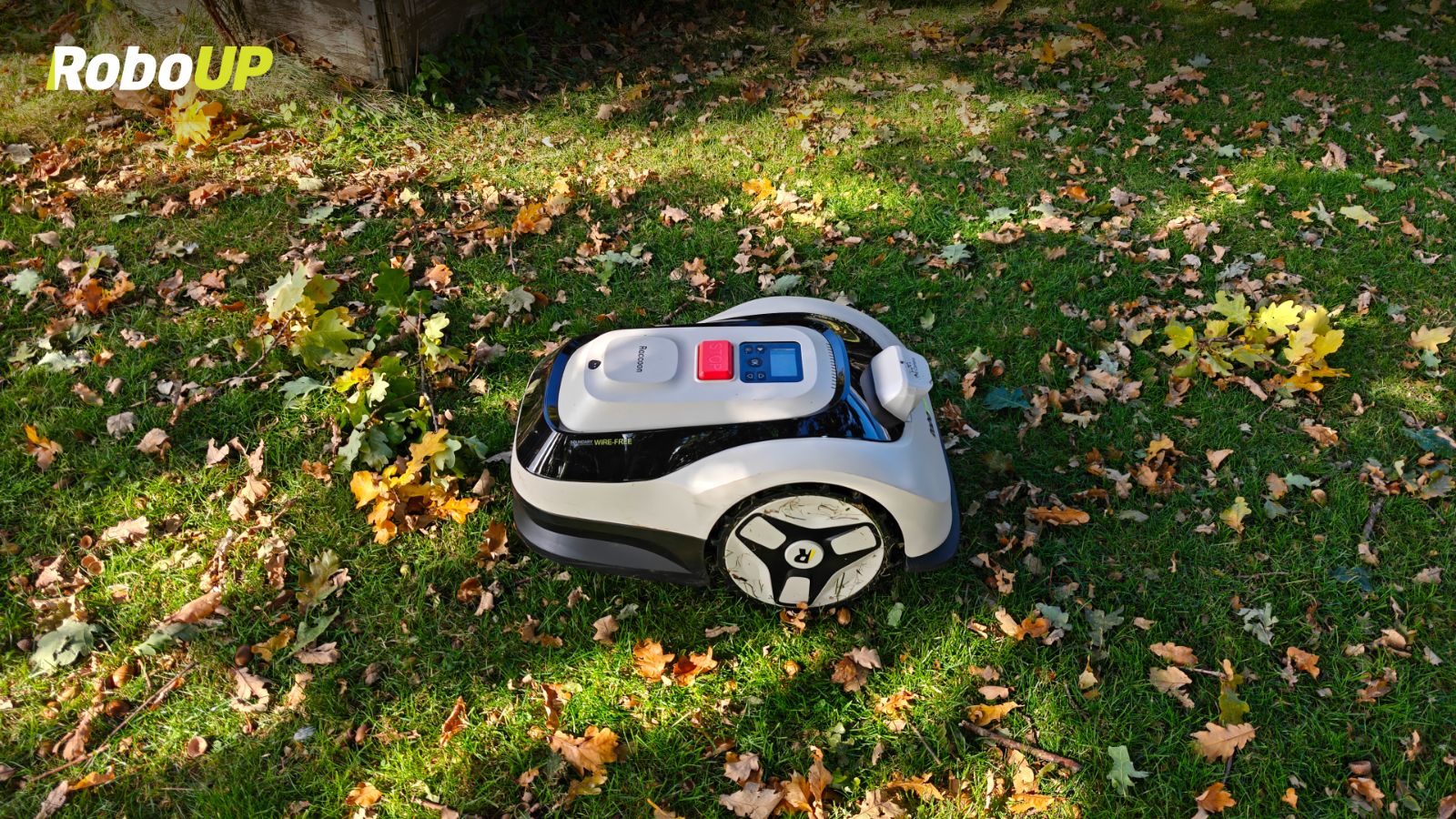
For homeowners using a robotic lawn mower, fallen leaves can also raise a practical question: will the mower mistake them for obstacles and avoid those areas? Models with AI-powered vision can help distinguish between different objects on the lawn, making navigation more intelligent. For example, the RoboUP Raccoon 2 SE uses AI Vision alongside VSLAM+IMU navigation to recognize more than 300 types of objects. Its vision-based recognition helps it distinguish fallen leaves from obstacles that require avoidance, supporting smoother navigation during the fall season.
That said, recognizing leaves does not mean a robotic mower can replace leaf cleanup altogether. Light leaf coverage may be manageable, but thick or wet piles can still block sunlight, trap moisture, and smother the grass. Keep the lawn clear of excessive leaf buildup to give your grass the best chance of staying healthy through winter.
3. Apply the Right Fall Fertilizer
Fertilizing is another important part of fall lawn maintenance, but the right approach depends on your grass type, soil conditions, and climate.
Cool-season grasses, such as tall fescue, perennial ryegrass, and Kentucky bluegrass, often benefit from fall fertilization. Cooler weather supports active growth, and the grass can continue developing roots even as the rate of leaf growth slows.
Warm-season grasses, including Bermuda grass, zoysia, and St. Augustine grass, follow a different growth cycle. As they approach dormancy, heavy nitrogen applications may be unnecessary or poorly timed. Fertilizing too late can also encourage vulnerable growth when the grass should be preparing for colder conditions.
Before buying fertilizer, consider the following:
- Test your soil if possible: A soil test can identify nutrient deficiencies and help determine whether lime or other amendments are needed.
- Choose a fertilizer suited to your lawn: Do not assume every fall fertilizer has the right nutrient balance for your grass.
- Follow the product label: Apply the recommended amount and water it in as directed.
- Avoid overfertilizing: Excess nutrients can damage grass and contribute to runoff into nearby waterways.
Timing matters as much as the product itself. In many regions, early to mid-fall is a useful fertilization window for cool-season lawns. The objective is not to make the lawn grow as quickly as possible. It is to supply the nutrients it needs at the right point in its seasonal growth cycle.
There is also a simple way to return some nutrients to your lawn without reaching for the fertilizer bag every time you mow: leave finely chopped grass clippings on the lawn. When the grass is actively growing and the clippings are short enough to fall between the blades, they decompose naturally and return nutrients, including nitrogen, to the soil.
This is where a robotic lawn mower like the RoboUP Raccoon 2 SE can be a practical addition to your lawn care routine. By maintaining the lawn through regular mowing, it can help keep grass at a manageable height, allowing small clippings to settle back into the turf rather than accumulating in thick piles. Over time, these clippings can contribute organic matter and recycle some of the nutrients the grass has already absorbed.
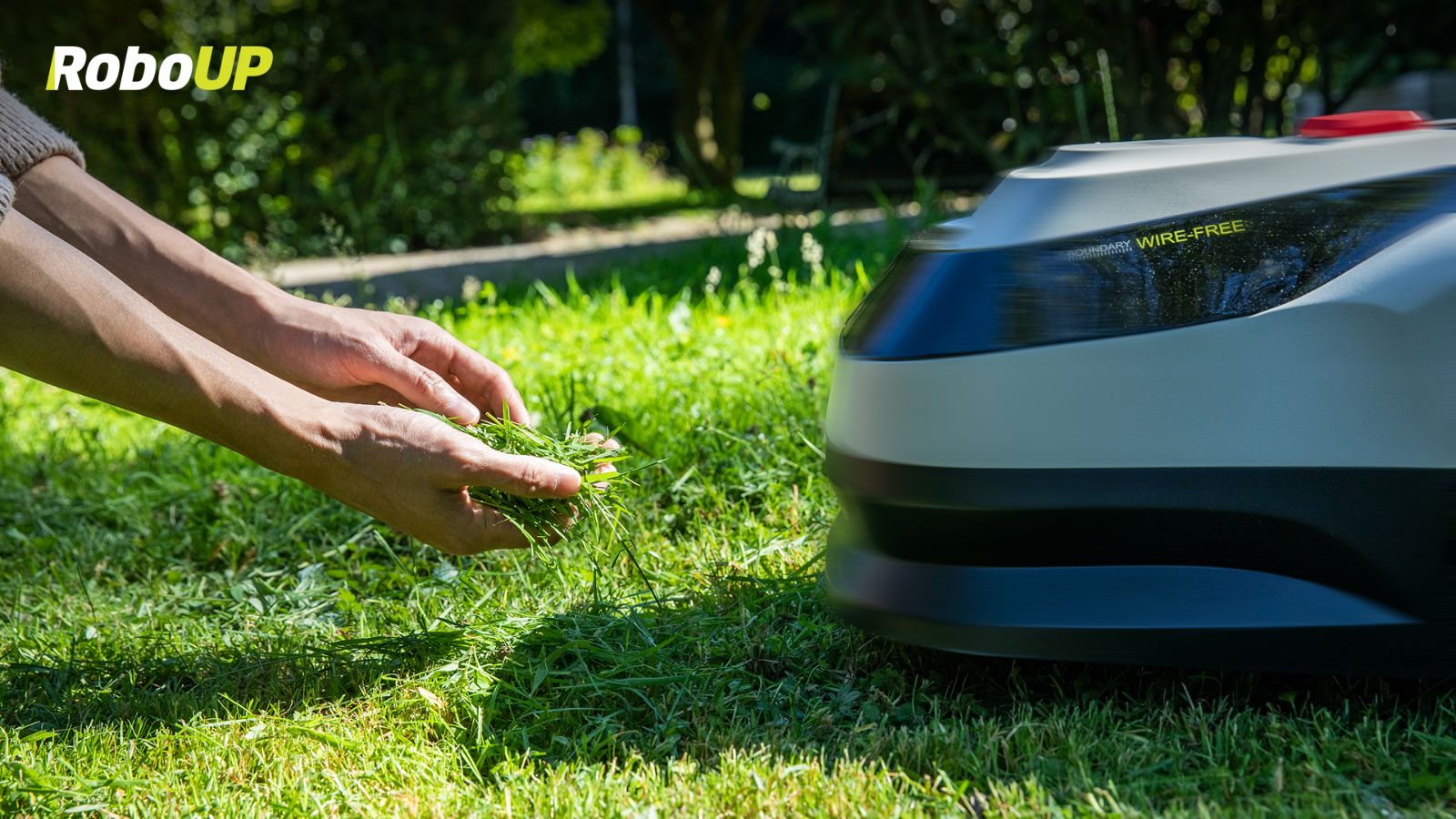
Grasscycling can reduce the need for some additional fertilizer, but it does not replace every nutrient your lawn may need. For the best results, combine regular mowing with soil testing and a fertilization plan suited to your grass type and local conditions.
4. Repair Thin or Bare Patches With Overseeding
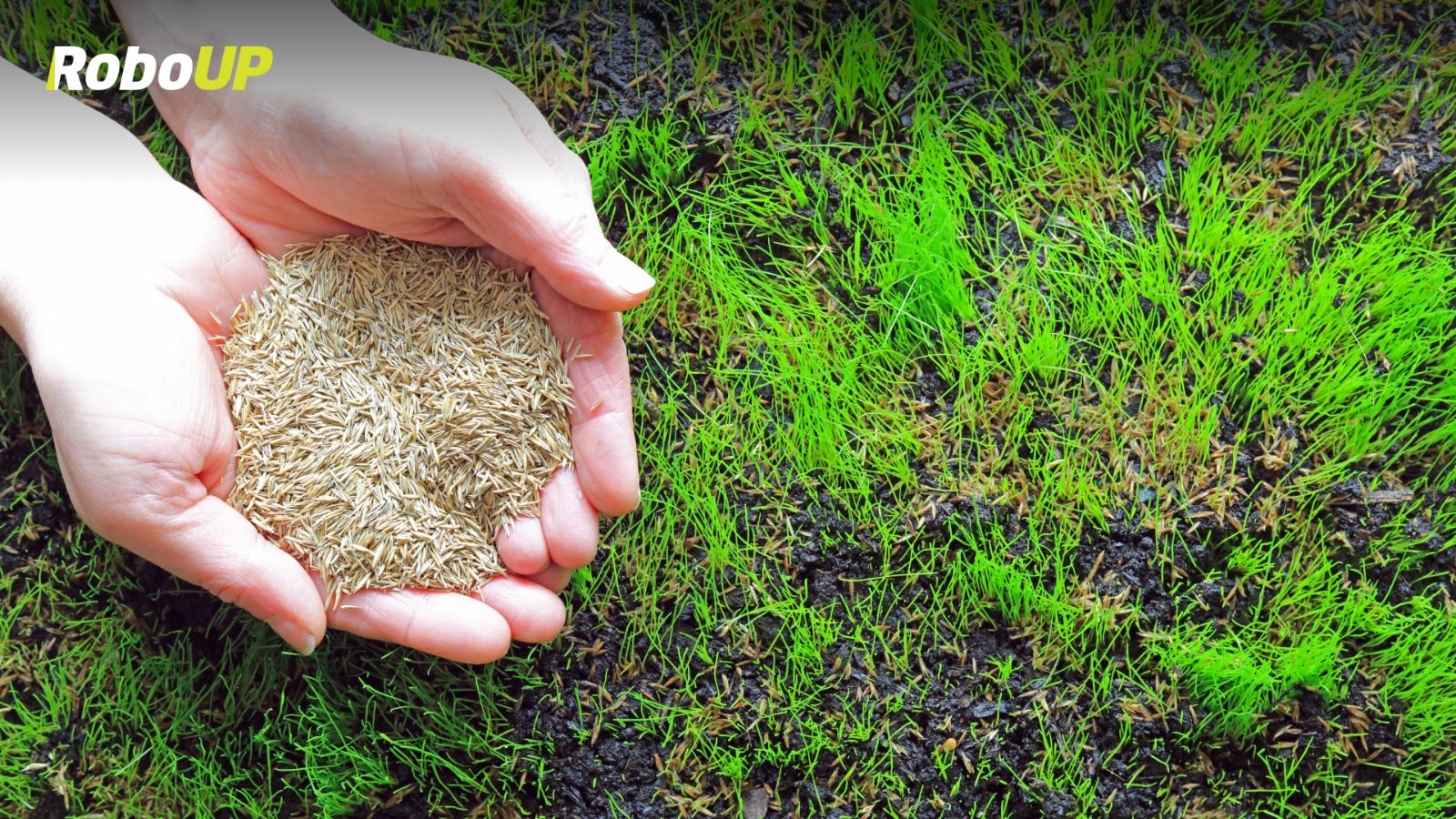
If your lawn looks patchy after a hot, dry summer, fall can be a good opportunity to encourage thicker growth. Overseeding means spreading grass seed over an existing lawn to fill thin areas without starting from scratch.
For cool-season lawns, early fall often provides a helpful combination of warm soil, cooler air, and less intense summer heat. These conditions can support germination and allow young grass to establish before winter. However, the ideal timing depends on your region and the date of the first expected frost.
Follow these steps for better results:
Step 1: Identify the cause of the damage. Bare patches may result from drought, heavy foot traffic, compacted soil, pests, or poor drainage. Adding seed alone will not solve an underlying problem.
Step 2: Prepare the area. Mow as appropriate for your grass type and remove excess debris. Loosen the soil surface or aerate compacted areas if necessary so that seeds can make good contact with the soil.
Step 3: Choose compatible grass seed. Match the seed to your existing lawn, sunlight conditions, climate, and intended use.
Step 4: Spread the seed evenly. Follow the recommended seeding rate rather than adding extra seed in the hope of getting faster results.
Step 5: Keep the seedbed moist. Water lightly and frequently enough to prevent the upper soil from drying out. Once seedlings establish, gradually adjust the watering schedule.
If you use a robotic lawn mower, bare patches can present another challenge. Some models may interpret areas without grass as obstacles and steer around them instead of continuing along their mowing path. The RoboUP Raccoon 2 SE addresses this with its Bald Spot Enhancement feature, designed to help the mower pass directly through bare patches without triggering obstacle avoidance. This can make navigation across patchy lawns more straightforward, even when the grass coverage is uneven.
To try the feature, update your mower to Firmware V6.5.00 and the RoboUP app to Version 2.4.9, then follow these steps:
1. Select your mower on the app's home screen and tap Enter.
2. Tap More Functions in the top-right corner.
3. Select Lab Feature.
4. Tap Lawn Recognition Mode.
5. Turn on Bald Spot Enhancement.
The feature helps the mower navigate through bare areas, but it does not repair the lawn itself. If you're overseeding, give the new grass enough time to establish and avoid heavy foot traffic in the meantime. Resume mowing when the seedlings are ready, following the recommendations for your grass type. This way, you can work toward a fuller lawn while keeping routine maintenance manageable.
5. Aerate Compacted Soil to Help Roots Grow
A lawn can receive plenty of water and fertilizer yet still struggle if the soil underneath is compacted.
Repeated foot traffic, children playing, pets, and lawn equipment can press soil particles together. This reduces the spaces that allow air, water, and nutrients to move through the soil, making it harder for roots to grow.
Core aeration can help. The process removes small plugs of soil from the lawn, creating channels that improve the movement of air and water into the root zone.
Fall is often a good time to aerate cool-season lawns while they are still actively growing and have time to recover. However, not every lawn needs annual aeration.
Look for signs such as:
- Water pooling on the surface after rain or irrigation.
- Soil that feels unusually hard.
- Grass thinning in areas that receive frequent foot traffic.
- Difficulty pushing a garden fork into the ground.
If your lawn shows these symptoms, consider core aeration before overseeding or fertilizing, where appropriate.
For best results, aerate when the soil is slightly moist, not bone-dry or waterlogged. Avoid working on saturated soil, which can become damaged by equipment.
6. Adjust Your Watering Routine as Temperatures Drop
Cooler weather generally reduces a lawn's water demand, but it does not eliminate the need for irrigation. Dry autumn weather can still stress grass, particularly in regions with limited rainfall.
Instead of following your summer watering schedule automatically, pay attention to rainfall, soil moisture, and the condition of the grass.
For established lawns, deeper, less frequent watering is often preferable to frequent shallow watering because it encourages roots to grow farther into the soil. The amount required varies with grass type, soil texture, weather, and local water restrictions.
Here are a few practical ways to manage fall watering:
- Check rainfall first: Avoid unnecessary irrigation after substantial rain.
- Water early in the day when practical: This gives grass time to dry before evening.
- Watch for signs of drought stress: Grass that stays folded, wilted, or slow to recover after being walked on may need water.
- Pay extra attention to new seed: Overseeded areas need more consistent moisture than established turf during germination and early growth.
As temperatures fall and grass growth slows, reduce watering accordingly. Once the lawn is dormant, irrigation needs may be much lower, although extended dry periods can still matter depending on the climate and grass species.
The goal is to keep the lawn adequately hydrated without creating persistently wet conditions that encourage disease or waste water.
7. Deal With Weeds Before They Spread
Weeds do not necessarily disappear when summer ends. In fact, fall can be a useful time to control many perennial broadleaf weeds and certain winter annual weeds.
Dandelions and clover, for example, may remain visible in autumn, while weeds such as chickweed and henbit can establish as conditions become cooler. The best treatment depends on the weed species and whether it is actively growing or has yet to germinate.
Start by identifying what is growing in your lawn. Pulling a few weeds by hand may be enough for a small infestation, especially when the soil is moist and roots are easier to remove. For larger problems, targeted weed control may be appropriate.
Keep these points in mind:
- Treat weeds at the right stage: Post-emergent products target weeds that have already appeared, while pre-emergent products help prevent certain weed seeds from germinating.
- Read the label carefully: Application timing, temperature requirements, and restrictions vary by product.
- Be cautious around new grass seed: Some herbicides can interfere with seed germination or damage young grass.
- Improve lawn density: Healthy, well-maintained grass competes with weeds for light, water, and space.
It is tempting to apply a broad treatment across the entire lawn, but that is not always necessary. Identify the problem first, then choose the least disruptive effective option.
For homeowners planning to overseed, the order of operations is especially important. Some weed-control products require a waiting period before grass seed can be planted.
8. Finish With a Final Mow and a Quick Winter Check
Your final mowing of the season should be based on grass growth, not a fixed date. Some lawns need another cut well into late fall, while others stop growing much earlier.
For the last few cuts, maintain an appropriate height for your grass type. Avoid scalping the lawn to make it look tidy for winter, and do not leave it excessively long going into prolonged cold or wet weather.
Before putting your mower away, walk around the yard and check for a few easy-to-miss issues.
- Remove remaining leaf piles and debris: Thick, damp piles can damage the grass beneath them.
- Clear sticks and fallen branches: These can obstruct mowing and leave damaged areas if they remain on the lawn.
- Check drainage: Areas that regularly collect water may need attention before next year's growing season.
- Store equipment properly: Clean the mower, inspect the blades, and follow the manufacturer's storage instructions. If you use a robotic mower, prepare it for seasonal storage according to its manual.
- Review any unfinished tasks: If you still need to aerate, overseed, or fertilize, check whether your local conditions allow enough time for the grass to benefit before dormancy.
A little preparation now can reduce the amount of cleanup and repair waiting for you next spring.
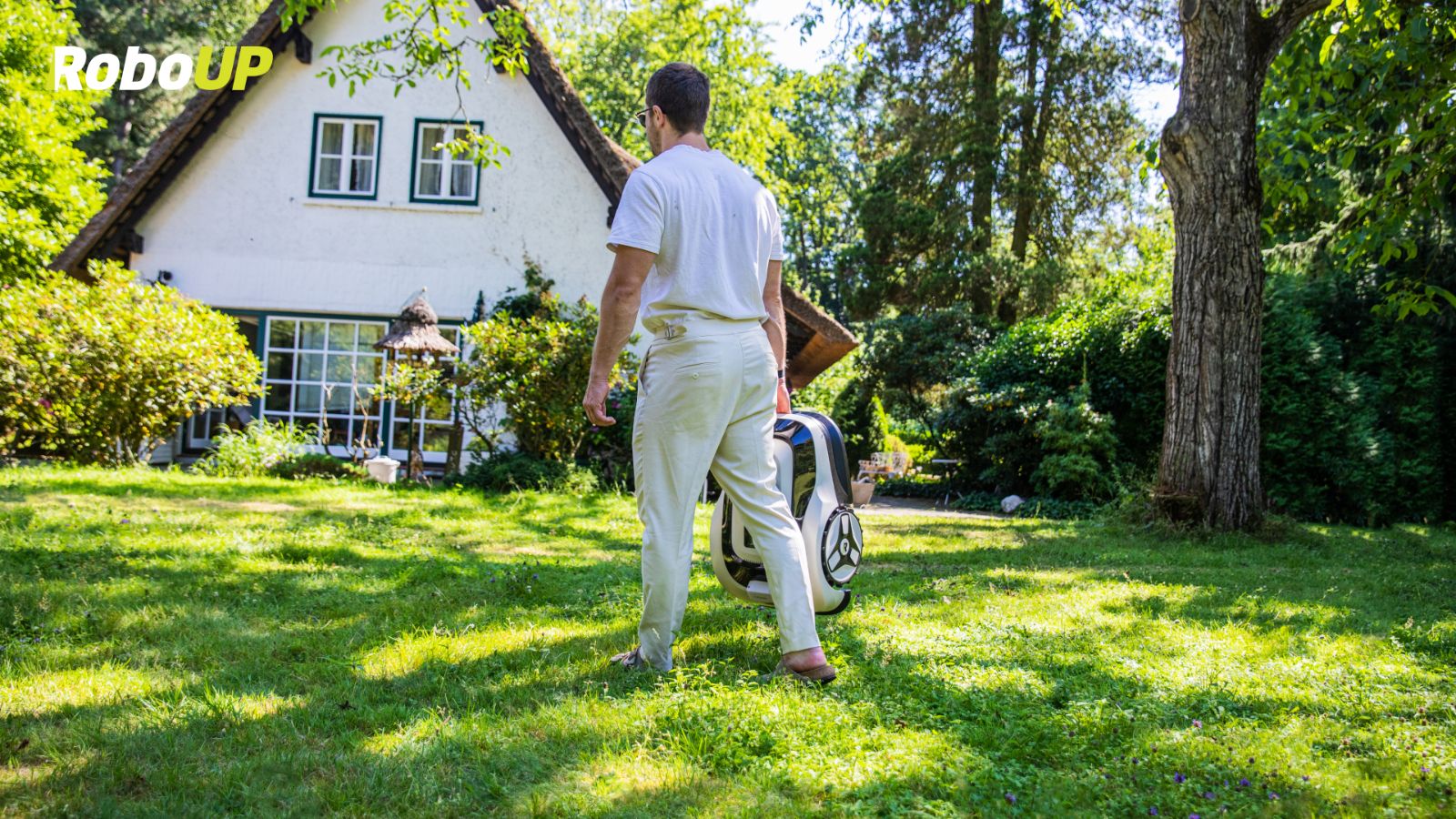
Make Fall Lawn Maintenance Easier With a Consistent Routine
Fall lawn care does not have to mean spending every weekend working in the yard. In many cases, the biggest improvement comes from keeping up with small jobs before they become larger problems.
For homeowners who want to spend less time on routine mowing, a robotic lawn mower can also help maintain a more consistent cutting schedule during the growing season.
The RoboUP Raccoon 2 SE is designed for smaller lawns and offers wire-free operation without a boundary wire or RTK base station. Its AI Vision and VSLAM+IMU navigation system helps it recognize obstacles and navigate the lawn, while its parallel mowing pattern supports systematic coverage. For homeowners who prefer a straightforward setup, its one-click start makes routine mowing easier to manage.
The Raccoon 2 SE is intended for lawns of up to 600 m² (approximately 0.15 acre), with mowing height adjustment from 30 to 80 mm and slope handling of up to 36%, subject to suitable lawn conditions. It can help reduce the effort involved in regular mowing, leaving you more time for seasonal tasks such as clearing leaves, checking soil conditions, and repairing bare patches.

Of course, a robotic mower is not a replacement for the full fall lawn care checklist. It will not aerate compacted soil, decide which fertilizer your lawn needs, or eliminate every weed. You will still need to prepare the lawn for winter and adjust mowing to seasonal growth.
If you're looking for a simpler way to keep a smaller lawn maintained, explore the RoboUP Raccoon 2 SE and see whether it fits your yard and lawn-care routine.
Prepare Your Lawn for a Better Spring
A healthy spring lawn often starts with a few sensible decisions in autumn. Keep leaves from accumulating, mow at an appropriate height, provide water when needed, and address compacted soil or thin patches before the growing season ends.
You do not need to complete every task on the same weekend. Work through this fall lawn care checklist as weather and local conditions allow, and focus on what your lawn actually needs.
With a little planning, fall lawn maintenance becomes less about catching up on chores and more about giving your grass a stronger start next year.
Frequently Asked Questions About Fall Lawn Care
Q1: When should I start fall lawn care?
In many regions, late summer to early fall is a good time to begin. Aeration, overseeding, and fertilization are often most useful while cool-season grass is actively growing. In warmer climates, the schedule can be different. Use local growing conditions and the expected first frost as guides rather than relying on the calendar alone.
Q2: Should I cut my grass shorter before winter?
Not necessarily. Cutting grass too short can stress the lawn, while excessively long grass may mat under snow or wet debris. Maintain the recommended height for your grass type and make only gradual adjustments as growth slows.
Q3: Is fall a good time to overseed a lawn?
Yes, for many cool-season lawns. Early fall often provides favorable soil temperatures and cooler air for seed establishment. However, success depends on the grass variety, local climate, and having enough time for seedlings to establish before winter.
Q4: Do I need to aerate my lawn every fall?
No. Aeration is most useful when the soil is compacted or the lawn shows signs of poor water infiltration and restricted root growth. Some lawns benefit from regular aeration, while others only need it occasionally.
Q5: Should I keep watering my lawn in fall?
Yes, if rainfall is insufficient and the grass still needs moisture. Reduce irrigation as temperatures fall and growth slows, but pay particular attention to newly seeded areas, which need consistent moisture during establishment.
Q6: Can a robotic lawn mower help with fall lawn care?
A robotic mower can reduce the effort required for routine mowing while the grass is actively growing. For example, the RoboUP Raccoon 2 SE is designed for lawns up to 600 m² and offers wire-free navigation and one-click starting. Seasonal tasks such as leaf removal, aeration, fertilization, overseeding, and winter preparation still require separate attention.


0
0
The Best Gift for Grandparents: An Easy Lawn Care Guide for National Grandparents Day

